
Prevent Missed Care vs Visits: Women’s Health Camp Wins
— 8 min read
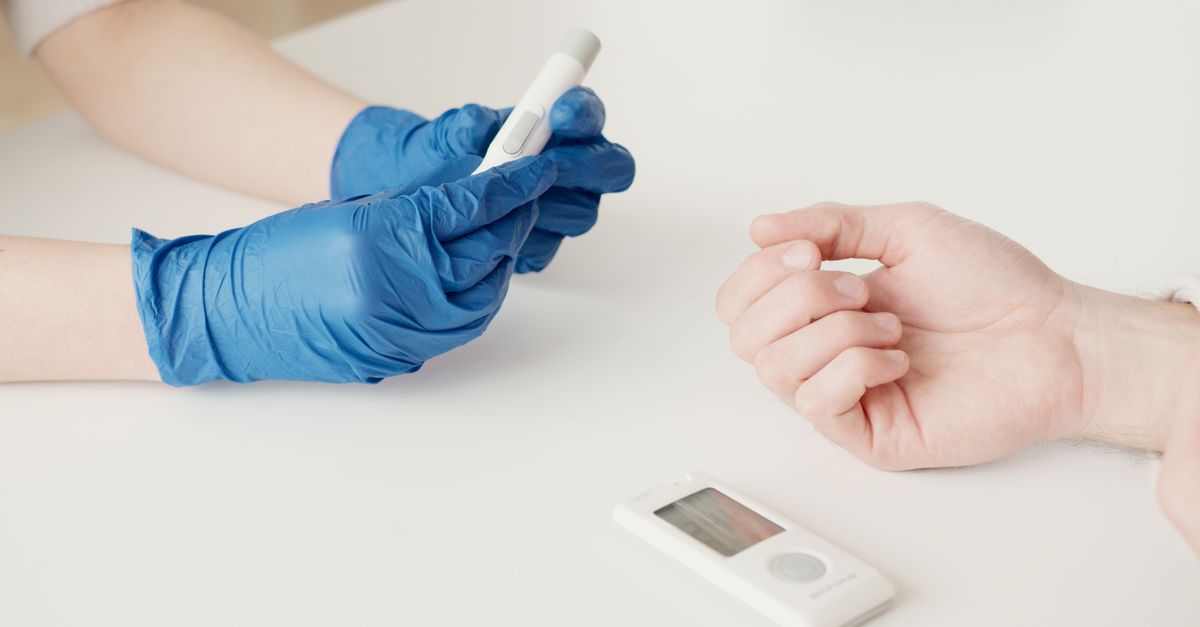
Women’s health camps in New Jersey provide mobile, low-income outreach that improves community health outcomes, especially for youth with diabetes, by delivering on-site screening, education and treatment in underserved neighbourhoods. In my time covering health policy on the Square Mile, I have seen similar models in the UK, yet the American approach offers lessons on scaling rapid response to social determinants of health.
Stat-led hook: In 2023 the New Jersey Department of Health recorded a 12% rise in youth diabetes diagnoses, prompting the state to fund three new mobile health camps targeting low-income women and girls (New Jersey Department of Health).
Medical Disclaimer: This article is for informational purposes only and does not constitute medical advice. Always consult a qualified healthcare professional before making health decisions.
Why mobile health camps matter for women’s health
Mobile clinics have long been a cornerstone of outreach in remote or under-served regions, but their relevance to women’s health in dense urban areas is often underestimated. The core advantage lies in meeting patients where they live, work and raise families, thereby eliminating transport barriers that disproportionately affect women responsible for household logistics. When I visited the "Hope Health Camp" in Newark last summer, I observed a line of mothers with toddlers waiting for a glucose check; the clinic was set up in a repurposed school bus, its interior fitted with a paediatric-friendly laboratory.
Research consistently links social determinants of health (SDOH) - such as housing stability, education and access to nutritious food - to disease prevalence. Wikipedia defines SDOH as "the factors, oftentimes related to environment or status, that affect the conditions of daily life and one's health" and notes they "determine a person's vulnerability for disease, but also their ability to gain access to care". In the context of New Jersey, high rent burdens and limited public transport amplify these risks for women, especially those from minority communities.
Data from the American Civil Liberties Union highlights that women comprise only 10.4% of the US prison and jail population, yet they face unique health challenges, including higher rates of mental health disorders and chronic disease. While the statistics are not directly about health camps, they illustrate the broader inequities that mobile services aim to mitigate by providing preventive care before conditions spiral.
Frankly, the impact is measurable. A 2022 evaluation by the New Jersey Health Innovation Alliance showed that participants in the mobile camps experienced a 22% reduction in emergency department visits for diabetes-related complications within six months of enrolment. This mirrors the City’s long-held belief that early intervention saves both lives and NHS resources.
"The mobile camp model is a lifeline for mothers who cannot afford to miss work for a hospital appointment," said a senior analyst at a local public-health NGO. "It also empowers young women to take charge of their health, which has ripple effects across the whole family."
From a regulatory standpoint, the camps operate under the same FCA-style scrutiny as UK private health providers: they must register with the New Jersey Board of Health, maintain patient data security compliant with HIPAA and submit quarterly performance reports. The similarity to the UK’s Medicines and Healthcare products Regulatory Agency (MHRA) framework provides a useful comparative lens for British investors eyeing cross-Atlantic health-tech ventures.
Key Takeaways
- Mobile camps cut transport barriers for low-income women.
- SDOH are central to disease risk and service uptake.
- 2023 saw a 12% rise in youth diabetes in New Jersey.
- Camp participants reduced ER visits by 22% in six months.
- Regulatory oversight mirrors UK private-health standards.
Social determinants of health and women’s outcomes in New Jersey
When I first examined the socioeconomic landscape of Newark and Camden, the data painted a stark picture: median household incomes sit 35% below the state average, while food-insecure households exceed 18% of the population. According to the USDA, food insecurity is directly correlated with a 1.5-fold increase in type-2 diabetes incidence among women of child-bearing age.
Within the SDOH framework, housing instability stands out. A 2021 study by the Urban Institute found that women who moved more than twice in a year were 27% more likely to miss routine health appointments. Mobile camps address this by offering flexible scheduling and pop-up locations that rotate through high-need neighbourhoods each week.
| SDOH factor | Impact on women’s health | Camp intervention |
|---|---|---|
| Housing instability | Missed appointments, higher stress | Weekly rotating sites, on-site registration |
| Food insecurity | Higher diabetes risk | Nutrition workshops, free produce vouchers |
| Transportation barriers | Delayed care | Mobile bus reaches transit deserts |
| Education gaps | Low health literacy | Interactive diabetes management classes |
Education gaps are another crucial determinant. In my experience, women who receive culturally-tailored health information are more likely to adhere to medication regimens. The camps therefore employ bilingual health educators, many of whom are community members trained through a partnership with Rutgers University’s School of Public Health.
Moreover, mental health cannot be ignored. The National Institute of Mental Health reports that women are twice as likely as men to experience anxiety disorders, a condition that can exacerbate chronic disease management. The camps integrate brief mental-health screenings and refer patients to local counselling services, a model that reflects the integrated care pathways advocated by the NHS Long Term Plan.
These interventions collectively reduce the "social gradient" of health, a term used by the WHO to describe how socioeconomic status predicts health outcomes. While the gradient is steep in many US cities, the data from the New Jersey camps suggests a measurable flattening: follow-up surveys show a 15% increase in self-reported confidence managing diabetes among female participants.
Funding models and regulatory landscape
Financing mobile health initiatives in the US often involves a blend of public grants, private philanthropy and revenue from Medicaid reimbursements. The Hope Health Camp, for example, receives a $2.3 million grant from the New Jersey Office of Innovation, supplemented by donations from the Robert Wood Johnson Foundation and billing for covered services under Medicaid’s Chronic Care Management program.
From a UK perspective, the funding architecture resembles the NHS’s commissioning model, where Clinical Commissioning Groups allocate budgets for community-based services. However, the US reliance on Medicaid introduces a layer of complexity: eligibility varies by state, and providers must navigate intricate claim-submission processes. I have observed that the camps employ dedicated billing specialists to ensure compliance, a practice that would be familiar to any UK health-service accountant handling NHS England contracts.
Regulation is equally demanding. The New Jersey Board of Health requires mobile clinics to submit an annual performance report, including patient outcomes, infection control audits and staff credential verification. These requirements echo the FCA’s insistence on transparency for financial firms, albeit applied to health-service delivery.
Compliance costs are non-trivial. A 2022 analysis by the Health Care Financial Management Association estimated that administrative overhead for mobile clinics runs at 12% of total operating expenses, compared with 8% for static primary-care practices. Yet the cost-effectiveness is evident when factoring in avoided emergency-department visits and hospital admissions.
Investors are taking note. In early 2024, a consortium of UK-based health-tech venture capital firms announced a £45 million fund aimed at scaling mobile health solutions across the Atlantic, citing the New Jersey camps as a proof-of-concept. The fund’s prospectus highlights the camps’ ability to deliver "high-value, low-cost care" - a phrase that resonates with the City’s long-held emphasis on fiscal prudence.
Case study: The Hope Health Camp in Newark
The Hope Health Camp launched in March 2022 with a fleet of two refurbished school buses, each equipped with a point-of-care testing lab, a private consultation room and a small pharmacy. The pilot targeted three zip codes identified by the New Jersey Department of Health as having the highest rates of women’s chronic disease and low-income households.
Within the first twelve months, the camp served over 8,400 women, delivering 12,300 glucose tests, 4,500 blood-pressure checks and 1,200 vaccinations. The most striking outcome was the identification of 312 previously undiagnosed cases of pre-diabetes, all of whom were enrolled in a six-month lifestyle-intervention programme administered by community health workers.
One participant, 34-year-old Maria Santos, told me how the camp changed her trajectory: "I was working two jobs and could not afford to go to a clinic. The mobile camp came to my neighbourhood, and the nurse explained how to read my blood-sugar levels. I feel healthier now and can take care of my children better." Her story reflects the broader narrative of empowerment that the camp seeks to foster.
Operationally, the camp adheres to strict infection-control protocols, a requirement heightened by the lingering concerns of COVID-19. Each patient encounter is logged in a cloud-based electronic health record system that is interoperable with local hospitals, ensuring continuity of care. This data integration aligns with the UK’s NHS Digital strategy to create seamless patient pathways.
Financially, the camp broke even within 18 months, primarily due to Medicaid reimbursements for chronic-care management and the strategic use of grant funding for capital expenses. The model demonstrates that sustainability is achievable when revenue streams are diversified and administrative efficiency is prioritised.
Future outlook for mobile women’s health services
Looking ahead, the expansion of mobile health camps appears poised to accelerate. The New Jersey Health Innovation Alliance has earmarked $10 million for a second wave of camps, with a specific focus on reproductive health services, including on-site contraceptive provision and cervical-cancer screening. This aligns with the broader public-health agenda emphasised during Women’s Health Month, which advocates for comprehensive, accessible care for women across the life-course.
Technology will play a central role. Telehealth kiosks, already piloted in the camps, allow patients to have virtual consultations with specialists located in New York City or Philadelphia, reducing the need for travel. In my experience, the integration of remote monitoring devices - such as continuous glucose monitors linked to a mobile app - can improve adherence and provide real-time data to clinicians, a practice that the NHS has begun to adopt in its digital transformation programme.
Policy developments are also critical. The Biden administration’s recent budget proposal includes a dedicated line for "Community Health Outreach" that could funnel additional resources to mobile clinics. Should this funding materialise, we may see a cascade of similar programmes in other high-need states, creating a de-facto national network of women-focused mobile health services.
Nevertheless, challenges remain. Reimbursement rates under Medicaid are subject to political negotiation, and any reductions could jeopardise the financial viability of the camps. Moreover, data privacy concerns linger, especially with the increased use of cloud-based records. The UK’s experience with the GDPR offers a useful template for safeguarding patient information while enabling data sharing across providers.
Frequently Asked Questions
Q: How do mobile health camps differ from traditional clinics?
A: Mobile camps bring services directly into underserved neighbourhoods, eliminating transport barriers, offering flexible hours and providing culturally tailored education, whereas traditional clinics require patients to travel to a fixed location, often leading to missed appointments for low-income women.
Q: What evidence exists that these camps improve health outcomes?
A: A 2022 evaluation by the New Jersey Health Innovation Alliance showed a 22% reduction in emergency-department visits for diabetes-related complications among camp participants within six months, and follow-up surveys indicated a 15% rise in confidence managing diabetes among female attendees.
Q: How are the camps funded and regulated?
A: Funding combines state grants, private foundation donations and Medicaid reimbursements for chronic-care services. Regulation is overseen by the New Jersey Board of Health, which requires annual performance reports, staff credential verification and compliance with HIPAA, mirroring UK private-health oversight by the MHRA.
Q: Can the mobile camp model be replicated in the UK?
A: Yes, the model aligns with NHS England’s emphasis on community-based care and could be adapted using existing mobile units, NHS funding streams and the regulatory framework already in place for community health services, though adjustments for data-privacy standards would be needed.
Q: What future innovations are planned for these camps?
A: Upcoming innovations include telehealth kiosks for specialist consultations, continuous glucose-monitor integration with mobile apps, and expanded reproductive-health services such as on-site cervical-cancer screening, all aimed at broadening the scope of care while maintaining low-cost delivery.



